Saturday, October 15, 2011

Should Marijuana Be Legalized


According to the article, marijuana is the most commonly abused illegal drug in the U.S. There are three main arguments that those who oppose the legalization of marijuana state. The first is that marijuana is currently the leading cause of substance dependence other than alcohol in the U.S. and legalizing it would only make this worse. A study done in 2008 on people, aged 12 or older, who are classified with the dependence on, or with the abuse of, an illicit drug, showed that 4.2 million out of 7 million people used marijuana. This means that nearly two-thirds of Americans suffering from any substance disorder suffer from marijuana abuse or marijuana dependence.

Another factor that contributes to the anti-legalization of marijuana is that drug-impaired driving would increase dramatically. The article mentions that marijuana is a significant factor in highway crashes, injuries, and deaths. It goes on to say that in a recent national roadside survey of weekend nighttime drivers, 8.6 percent tested positive for marijuana use. This was nearly four times the percentage of drivers with a blood alcohol concentration of .08 g/dL (2.2 percent), completed during the same survey.

The third and final argument suggested by the article is through the analogy of marijuana use to that of gambling. Sports gambling, most of which is still illegal, has had a significant increase in illegal gambling since other forms of gambling have been legalized. This precedent strongly suggests that illegal drug suppliers would sell more potent marijuana products outside the legal channels so that their wares are not taxed or restricted. As the article says, if marijuana were legalized, the only way to eliminate its illegal trade would be to sell marijuana untaxed and unregulated to any willing buyer.

So should marijuana be legalized? You decide.

Drug Facts: Marijuana


Over the next few weeks I will be discussing the drugs most commonly used in the United States. The first common drug I will discuss is marijuana.


Marijuana comes from the cannabis sativa plant. It is a mixture of the dried and shredded leaves, stems, seeds, and flowers from this plant. The mixture can be green, brown, or gray. Marijuana also has over 400 chemicals in it. The most psychoactive chemical, also known as mind alterering, is THC (tetrahydrocannabinol). The THC content of marijuana determines marijuana’s potency and it has been steadily increasing since the 1970s.


Street names, or slang terms that refer to marijuana, include; pot, grass, herb, weed, Mary Jane, reefer, skunk, boom, gangster, kif, chronic, and ganja.


Marijuana can be used in many ways. The most common is smoking loose marijuana rolled into a cigarette known as a joint or nail. Marijuana can also be smoked through a water pipe called a bong. It could also be smoked through a hollowed out cigar known as a blunt. Other users brew marijuana as tea or mix it with food.


Within minutes of inhaling, a user of marijuana begins to feel “high”. This is because THC activates the chemical dopamine in the brain which creates good feelings but these feelings are short lived. Marijuana affects memory, judgment, perception, and decision making. Many factors contribute to how a person will be affected by marijuana. These factors include; a person’s genetics, whether they’ve used marijuana or any other drugs before, how much marijuana is taken, and its potency. Combining marijuana with other drugs is not only unpredictable, but is dangerous.


THC affects the brain in more ways than just activating dopamine. It also interferes with learning in memory by affecting the hippocampus, a part of the brain that plays a critical role in certain types of learning. This leads to problems studying, learning new things, and recalling recent events. Another part of the brain affected by marijuana is the cerebellum which controls balance and coordination, resulting in slower reaction times, impaired judgment, and problems responding to signals and sounds.


Long-term use of marijuana leads to higher risk of psychosis. Psychosis is a severe mental disorder in which there is a loss of contact with reality, including false ideas about what is happening (delusions) and seeing or hearing things that aren’t there (hallucinations). Marijuana has also been known to increase depression and anxiety, particularly when a user tries to stop using the drug.


Currently there are no medications that treat marijuana addictions. There are many treatment programs that claim to help with breaking the addiction but they focus on behavioral therapies rather than treating the addiction itself. Marijuana is known as a “gate-way” drug because users of marijuana are more susceptible to trying “harsher” and more addictive drugs like cocaine. This susceptibility is not because of a direct cause of the marijuana but because the user has a higher likelihood of being exposed to the harsher drugs and therefor more likely to try them.

Next week I will be discussing the facts about stimulants such as cocaine, methamphetamines, and ecstasy.

How Secure Are Your Medications?

The article I chose to talk about for my fourth blog was written by Alison Johnson from the “Daily Press” Newport News, Virginia. The piece is titled “How to keep medicine out of the reach of children”. The article was also published and linked to the Post and Courier website from Charleston, SC. Even though this was written by an author in Virginia, it is clear that this issue does pertain to a much bigger area, including us in South Carolina and much more. Children and drug abuse, I have realized through just how I felt before I started this assignment, and have definitely grown through my research and my “blogging”, it is very significant social problem in our world today.


This particular piece discussed the issue of children having the ability to get prescription drugs through family and friends. From the family and friends I myself am surrounded by, this is definitely something that shocks me. It is bad enough that the children are receiving these prescription drugs in the first place, but by people that are close to them is just beyond belief. Through the different stories I have read so far, in the first couple of articles it was children being affected by a parent/guardian’s drug abuse, and now is going to children being enabled to have substance abuse problems by receiving them through people like friends and family. Honestly can’t tell you which one is worse and I feel it is both poor parenting in many ways.

Even though the article did discuss children getting the prescription drugs from family and friends, it also discussed the risk and different steps people like parents could take to try to prevent drug abuse being an issue with their own children. The group the author got information about this issue through “National Family Partnership”. From what I have gathered, this is one of the many different organizations are centered on things such as the issue of drug abuse (along with other issues) within families. In my eyes, there definitely can’t be enough of them! According to “National Family Partnership”, “seventy percent of children who abuse prescription drugs get them from friends and family.” Looking at these numbers makes the realization even bigger on how big of an issue this really is.

According to the President of “National Family Partnership” Peggy Sapp,
“The No. 1 mistake parents make is thinking it can't happen to their child.”

During the part of the article that discusses ways of preventing substance abuse with children, there are eight different tips discussed. They are recognize the risk, explain the risk, store drugs safely, dispose of drugs safely, set a good example, have family dinners, get to know your child’s friends, and collection information from places such as LockYourMeds.org for more ways to prevent risks and substantial information on the issue. As I said earlier on, reading this articles and looking at the number of children affected by the issue of drug abuse. This social problem is definitely a scenario that needs all of the awareness and risk prevention possible, as a society it is definitely something that needs to be brought up and prevented as much as possible.

Student Athletes Held to a Higher Standard

It is no new news that University of South Carolina Quarter Back Steven Garcia was dismissed from the football team this past Tuesday. In this article by ESPN, they state the reason for Garcia's dismissal was do to testing positive for alcohol and marijuana. Which was a direct violation of his contract to stay on the team.
"Being a student-athlete at the University of South Carolina is a privilege, not a right and we remind all of our student-athletes that there are consequences for their actions," Eric Hyman said in a statement.
However, this is not Garcia's first run in with alcohol problems in his college football career. This past April he arrived to skills seminar under the influence. Also, during the Chick-Fil-A Bowl in Atlanta he ran into a few issues, that began this long downward spiral. When asked if by the media if he had an alcohol problem Garcia stated "negative, no."

Many make arguments that Garcia had too many opportunities. However, no matter how many chances he was given, this is a good example of how ones actions with drugs and alcohol can have long term consequences. Now Garcia, can no longer play college football and also unlikely to be drafted to an NFL football team. This also, goes to show that when one is a public figure and many are looking at that one the societal standards are raised higher.

This semester USC has provided several cases of the importance of understand drinking and drugs -especially with underage drinking. Which leads to the point that many argued in favor of Garcia that he does not drink more than the average college student. However, that is not the principal of this situation, the principal is when you have other obligation and they require you to have a zero tolerance for alcohol and drugs, you must weigh out the consequences. As show through Garcia's dismissal you can lose opportunities of a life time, that many only dream of having.

There are many other consequences that could have happened. It is important to know that it only that it only one time use of illegal/legal substance for these consequences to happen. The worst case scenario is the lost of ones life. So please before partaking in any substance make sure you think about the consequences.

Friday, October 14, 2011

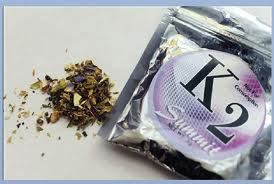
Columbia moves to outlaw fake pot and bath salts

This past month The State newspaper reported Columbia and Richland county are making moves to make the fake marijuana, K2 and spice, illegal.  K2 and spice are currently legal drugs sold in gas stations and smoke shops in South Carolina.  Three stores in Five Points currently sell the drugs.

While K2 and spice is a chemically produced substance to mimic the affects of marijuana, bath salts are a white powdery substance that can mimic the affects of cocaine or amphetamines.


"Earlier this month, a 17-year-old in Lexington County was hospitalized after becoming unresponsive from smoking K2, Watkins said. Local emergency rooms also have reported treating patients on bath salts who are so agitated that they have to be restrained for 72 hours, she said."


Local governments and officials have not reported and increase in crime due to the drugs, but are working on banning them in order to get ahead of any potential problems.  Across the country local governments are placing bans on the synthetic drugs and the U.S. Drug Enforcement has placed a ban on five synthetic drugs earlier this year.

The problem with these drugs are they are chemically based and are constantly changing.  The affects of these drugs are inconsistent and users do not know exactly how much of each chemical are in a package.  A person can use K2 without serous side affects one week and experience suicidal thoughts from using the drug the next week.

The move to ban these currently legal drugs are good move for the city of Columbia.  It is smart to get ahead of a drug trend that is already showing can create problems.  What are your thoughts on the potential ban of these synthetic drugs? Feel free to leave your opinions in the comment section below.

Sunday, October 9, 2011

Drug education training session-Columbia SC


The Lexington-Richland Alcohol and Drug Abuse Council recently held a training session to educate schools, law enforcement and legal officials of the recent drug and alcohol trends among teens.  The session covered topics including the recent marketing trends of drugs and alcohol and the larger use of synthetic drugs being used by teens.

In recent years there have been a change the drugs and alcohols marketed and used among teenagers.  There has been a growth in the use of synthetic drugs, particularly the use of Adderall, a drug used to treat attention deficit hyperactivity disorder (ADHD).  This drug has only recently become available to treat those with ADHD and has become a largely abused drug among teens and college students to aide in their studying.  It is important for adults to become aware of the issue of abuse with that drug as it is a situation that was not in occurrence years ago.

The marketing of alcohol has also greatly changed in recent years and has made products more appealing to a younger consumer.  Alcohol beverages are now being marketed with energy drinks and often times cheaper than the latter.  Some areas are beginning the ban the selling of alcoholic energy drinks, such as Four Lokos, which contain caffeine equivalent to four cups of coffee and alcohol equivalent to six beers all within one can.


Educating those in authority of the newest trends with drugs and alcohol allows them to better regulate and understand what teens are encountering in their lives.  Without this education, leaders will not be appropriately prepared to handle the negative results of drug and alcohol abuse.

Police Presences in Five Points (Columbia, South Carolina)

In an article by The Daily Gamecock, the University of South Carolina student run newspaper, discuss the new improvements that police chief Randy Scott has made in his first year. Within the first year Scott has increased the police presence in the Five Points, an area which is well known to many USC students to partake in underage drinking.The number of cops in the area on any given day is about eight and can swell up to as many as 30, for celebrations and home football games.

Scott has also created a hospitality team, which goes into places that sell alcohol in the Columbia area. He has created several other changes, however they do not pertain to drugs and alcohol.

At an ceremony, given this past Wednesday, in Scotts honor he stated that his efforts over the past year have decreased the numbers of arrest, while increasing the disciplinary programs use.

“We get no benefit from sending someone to jail and [giving them] a criminal record,” Scott said. 
Also, to fight the underage drinking problem of students at the university, Scott has increased referrals to the Office of Student Conduct. Therefor allowing the university to deal with the issue verses given the student a criminal record, as stated before. The increase of police in Five Points, however has created a large discussion among student of the university. Many students say that Scott is just trying to ruin a good night out with friends.

Overall, the presence of the cops in Five Points have done their job, even if students do not like it. The use of fake identification is illegal regardless if you want to drink underage or not. By cracking down they have begun to kill two bird with one stone. Truthfully, they have begun to kill three issues that have surrounded the area for years. The third issue being the party atmosphere of the school.

The cops are not trying to ruin a good time, they are trying to regulate the laws that have been apart of society for years. These laws, that have been broken time and time again, which have been back by data from when the drinking age was 18. It is important to know what is going on with drugs and alcohol in your area. Understanding the laws helps to prevent the many issues that surround them.